
Build vs Buy: When Should You Invest in Custom Software?
As businesses embrace digital transformation, one question frequently arises: should you buy an existing software solution or invest in custom software development? The answer depends on your business goals, operational requirements, budget, and long-term growth plans. While off-the-shelf software can provide a quick solution, custom software often delivers greater flexibility and competitive advantage.
3 min readBusiness Intelligence
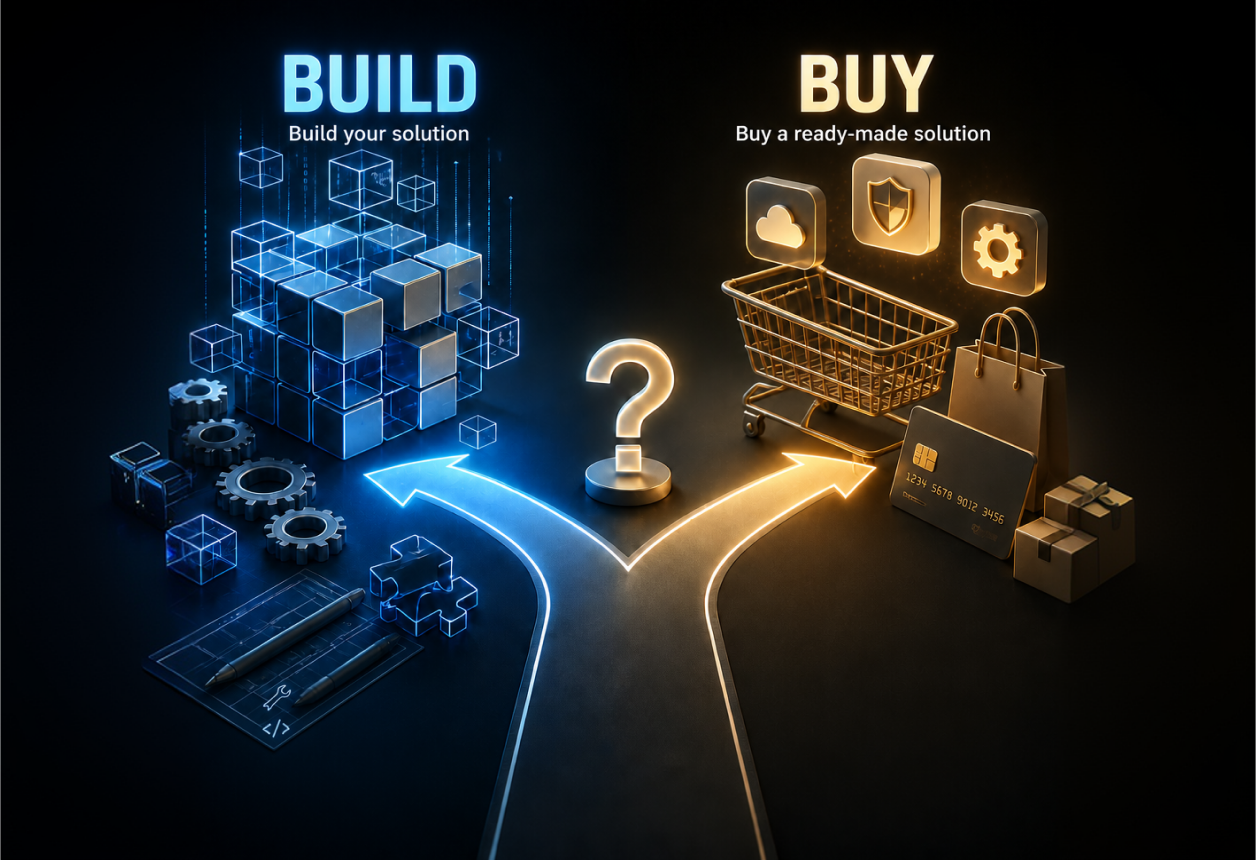
Understanding the differences can help you make the right investment.
When Buying Software Makes Sense
Off-the-shelf software is designed to serve a broad range of businesses. It can be implemented quickly and usually requires a lower upfront investment.
Buying software may be the right choice when:
· Your requirements are relatively standard
· You need a solution quickly
· Budget constraints are a major factor
· Customization requirements are minimal
Popular business tools for accounting, CRM, project management, and communication often fall into this category.
For many organizations, purchasing software is an effective way to solve common business challenges without investing in a full software development project.
The Limitations of Off-the-Shelf Solutions
While ready-made software offers convenience, it may not always align with the way your business operates.
Common limitations include:
· Features you don't need
· Missing functionality critical to your workflows
· Limited customization options
· Integration challenges with existing systems
· Ongoing subscription costs
As businesses grow, these limitations can impact productivity and create operational inefficiencies.
When Custom Software Development Makes Sense
Custom software development is often the better choice when your business processes are unique or when technology plays a key role in your competitive strategy.
Investing in custom software solutions may be the right decision if:
· Existing software doesn't meet your requirements
· You need specialized workflows
· Customer experience is a competitive differentiator
· Scalability is a priority
· Multiple systems need to be integrated
Unlike generic platforms, custom software is designed specifically around your business objectives.
Long-Term Value of Custom Software
While custom software development typically requires a higher initial investment, it can provide significant long-term benefits.
These include:
Greater Efficiency
Software built around your processes can reduce manual work and improve productivity.
Better Scalability
Custom software can evolve as your business grows, making it easier to add features, users, and integrations.
Competitive Advantage
Unique software capabilities can help differentiate your business from competitors relying on standard tools.
Ownership and Control
With custom software, you maintain greater control over functionality, data, security, and future development.
Questions to Ask Before Deciding
Before choosing between building or buying software, consider:
· Are our requirements unique?
· Will our needs change significantly over time?
· How important is scalability?
· Do existing solutions meet our long-term goals?
· Will software provide a competitive advantage?
The answers can help determine whether a purchased solution or custom software development is the better investment.
There is no universal answer to the build-versus-buy decision. For businesses with standard requirements, purchasing software may be the fastest and most cost-effective option.
However, when growth, efficiency, customer experience, and competitive differentiation are priorities, investing in custom software solutions often delivers greater value over time.
The key is to evaluate not only today's requirements but also where your business intends to be in the years ahead. The right technology decision should support both your current operations and your future growth strategy.
Share this opening with your friends
We're happy to share more
articles with you!
Mobile-First Design: Why Businesses Need to Prioritize Mobile User Experience
Learn why mobile-first design is essential for modern businesses and how UI/UX design improves mobile experiences, customer engagement, and digital growth.

Why Great UI/UX Design Is a Business Investment, Not a Design Expense
Discover how UI/UX design improves customer experience, increases conversions, reduces development costs, and drives long-term business growth.

Data Visualization: Turning Complex Data Into Clear Business Insights
Learn how data visualization helps businesses transform complex data into clear insights, improve decision-making, and unlock the value of analytics solutions.
Let's Build Something Amazing Together
Schedule a free consultation to discuss your project requirements.