
Before You Build an App, Ask These 7 Questions
Building an app can unlock new revenue streams, improve customer experiences, and streamline business operations. However, many businesses rush into development without fully validating their idea, leading to budget overruns, delays, or products that fail to gain traction.
3 min readStrategy
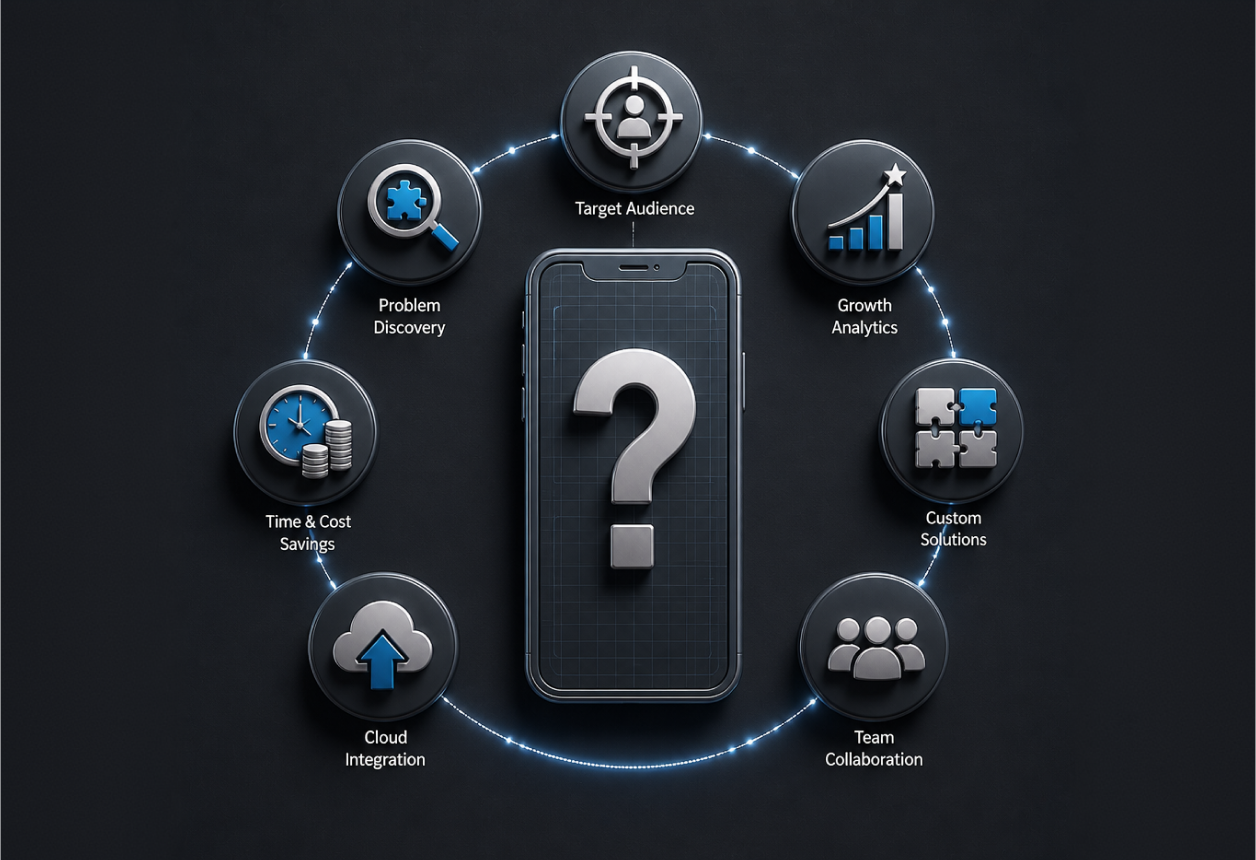
Before investing in app development services, take time to answer these seven important questions.
1. What Problem Is the App Solving?
The most successful apps solve a clear problem for a specific audience.
Instead of focusing on features, start by identifying the challenge your users face and how your app will provide a better solution. If the problem isn't clearly defined, the app's value may be difficult for users to understand.
2. Who Is Your Target Audience?
Not every app is built for everyone.
Understanding your target audience helps shape the app's design, features, and user experience. Consider who will use the app, their needs, and what motivates them to engage with your product.
The better you understand your users, the stronger your app development strategy will be.
3. What Are Your Business Goals?
Before starting a custom app development project, define what success looks like.
Are you trying to:
· Generate revenue?
· Improve customer engagement?
· Automate internal processes?
· Expand into new markets?
Clear business goals help guide development decisions and ensure the app supports long-term growth.
4. What Features Are Essential?
One of the biggest mistakes businesses make is trying to build everything at once.
A Minimum Viable Product (MVP) focuses on the core features needed to solve the primary problem. Launching with essential functionality allows businesses to gather feedback, reduce costs, and improve the product over time.
A successful mobile app development project often starts small and scales strategically.
5. What Is Your Budget and Timeline?
App development requires careful planning and realistic expectations.
Understanding your budget and launch timeline early helps prioritize features and avoid unexpected costs. A professional app development company can help create a roadmap that aligns with both business goals and available resources.
6. How Will the App Scale?
Many businesses focus only on launch requirements without considering future growth.
As user numbers increase, your app should be able to handle higher demand, new features, and third-party integrations. Planning for scalability from the beginning can prevent expensive rebuilds later.
Scalable app development solutions provide greater flexibility as your business evolves.
7. Who Will Build and Support the App?
Choosing the right app development partner is just as important as the idea itself.
Look for a team that offers:
· Technical expertise
· Business understanding
· Transparent communication
· Ongoing support and maintenance
The best app development companies don't simply build applications—they help businesses create products that deliver long-term value.
Building an app is a significant investment, and success starts long before development begins.
By answering these seven questions, businesses can reduce risks, clarify goals, and make better decisions throughout the app development process.
Whether you're launching a startup idea or developing a custom business application, proper planning can save time, reduce costs, and dramatically improve your chances of success.
Before writing a single line of code, make sure you know exactly what you're building, who you're building it for, and how it will support your business goals.
Share this opening with your friends
We're happy to share more
articles with you!
Mobile-First Design: Why Businesses Need to Prioritize Mobile User Experience
Learn why mobile-first design is essential for modern businesses and how UI/UX design improves mobile experiences, customer engagement, and digital growth.

Why Great UI/UX Design Is a Business Investment, Not a Design Expense
Discover how UI/UX design improves customer experience, increases conversions, reduces development costs, and drives long-term business growth.

Data Visualization: Turning Complex Data Into Clear Business Insights
Learn how data visualization helps businesses transform complex data into clear insights, improve decision-making, and unlock the value of analytics solutions.
Let's Build Something Amazing Together
Schedule a free consultation to discuss your project requirements.